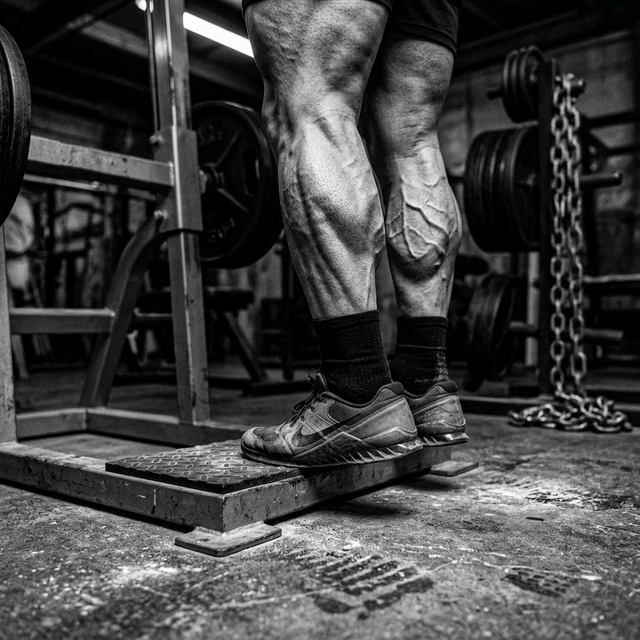
Stubborn Calves: Why They Won't Grow (And How to Fix It)
The Cure for Stubborn Calves: Genetics vs. Training Error
Let us address the most universally cursed, perpetually frustrating, and visually infuriating muscle group on the human physique: the calves. For the natural bodybuilder, nothing screams “bad genetics” louder than a pair of high-insertion, pencil-thin lower legs that refuse to budge despite years of brutal, seemingly high-intensity leg days. The lower leg—specifically the triceps surae complex—remains one of the most polarizing and misunderstood muscle groups in the entire field of natural bodybuilding and sports science.
While some individuals possess voluminous, diamond-shaped calf development from simply walking up a flight of stairs or playing casual Sunday football, others engage in years of dedicated, heavy training regimens only to see marginal, practically non-existent gains. This stark discrepancy has fueled a long-standing, often exasperated debate inside gyms worldwide: is the “stubbornness” of the calves purely a product of immutable genetic factors, or is it a catastrophic failure of standard training methodologies? If you are desperately searching for how to grow stubborn calves, you must first abandon the search for a “magic pill” or a secret, esoteric routine. Instead, you need a clinical, biomechanical overhaul of your entire approach.
Recent longitudinal studies, comprehensive meta-analyses, and groundbreaking advancements in musculoskeletal imaging have begun to unravel this enduring mystery. The scientific consensus is becoming increasingly clear: while your internal genetics and bone structure define the anatomical framework and the shape of the muscle, the vast majority of trainees are severely limiting their hypertrophy by committing fundamental training errors. These errors systematically neglect the length-tension relationship of the muscle fibres, completely ignore the necessity of heavy mechanical tension, and continuously fail to account for the powerful viscoelastic properties of the Achilles tendon. It is time to dissect the clinical reality of lower leg hypertrophy and provide the definitive cure.
Anatomical Architecture and Functional Divergence
A comprehensive, professional-grade analysis of calf hypertrophy must begin with a rigorous, uncompromising examination of the underlying anatomy. You cannot build a structure if you do not understand its architectural blueprints. The lower leg is dominated by the triceps surae, a three-headed muscular complex that essentially dictates the entire aesthetic volume of the posterior shin. This complex comprises the gastrocnemius (featuring both medial and lateral heads) and the deeper, vastly larger soleus muscle.
These muscles, along with the plantaris—a minor, vestigial structure that is entirely absent in roughly 10% of the human population—unite to form the mighty Achilles tendon. The Achilles is the thickest, strongest, and most robust tendon in the human body, inserting directly into the calcaneus (the heel bone). Understanding the interplay between these muscles and this massive tendon is the cornerstone of calf growth.
The Gastrocnemius: The Biarticular Powerhouse
The gastrocnemius is a biarticular muscle, meaning it crosses two separate joints: the knee and the ankle. It originates from the medial and lateral condyles of the femur (the thigh bone) and runs down to blend into the Achilles tendon. Its primary physiological functions include the plantarflexion of the ankle (pointing the toe downwards) and providing vital assistance in knee flexion (bending the knee).
Because it crosses two joints, the force-production capacity of the gastrocnemius is heavily, almost entirely, influenced by the position of the knee. In a state of full knee extension (legs straight), the gastrocnemius is pulled taut. It is at its optimal physiological length for maximal force production and mechanical tension. However, as the knee flexes (bends), the origin and insertion points of the muscle move closer together. The gastrocnemius enters a state known as active insufficiency. In this shortened state, the actin and myosin filaments within the muscle fibres overlap too much, rendering the muscle biomechanically incapable of generating significant tension. This fundamental anatomical reality has profound implications for exercise selection. Seated calf raise variations essentially isolate the soleus by intentionally placing the gastrocnemius at a mechanical disadvantage.
The Soleus: The Deep Engine of Volume
The soleus, by stark contrast, is a monoarticular muscle. It originates lower down the leg, from the posterior surface of the tibia and the fibula (the shin bones). Because it does not cross the knee joint, its leverage and tension-generating capacity remain entirely unaffected by knee position during plantarflexion.
While the soleus is often neglected or dismissed by amateur lifters due to its deeper, less superficially “bumpy” placement beneath the gastrocnemius, it is an absolute behemoth. The soleus contributes significantly to the overall total volume, thickness, and width of the lower leg. When you view a well-developed bodybuilder from the side, the sheer thick slab of muscle dropping down towards the ankle is predominantly the soleus. A comprehensive soleus vs gastrocnemius training protocol must account for the distinct biomechanical requirements of each to maximise total leg circumference.
Furthermore, we must acknowledge the anterior compartment of the lower leg, primarily the tibialis anterior. This muscle, responsible for dorsiflexion (pulling the toes up towards the shin), serves as a crucial antagonist, providing essential structural stability and aesthetic counterbalance to the massive muscles of the posterior chain.
| Muscle | Origin | Insertion | Primary Action | Functional Role |
|---|---|---|---|---|
| Medial Gastrocnemius | Medial femoral condyle | Posterior calcaneus | Plantarflexion, knee flexion | Explosive movements, sprinting, horizontal force. |
| Lateral Gastrocnemius | Lateral femoral condyle | Posterior calcaneus | Plantarflexion, knee flexion | Explosive movements, stabilisation during acceleration. |
| Soleus | Tibia and Fibula | Posterior calcaneus | Plantarflexion | Postural stability, extreme muscular endurance, walking. |
| Plantaris | Lateral supracondylar ridge | Calcaneus | Weak plantarflexion | Vestigial function, minor proprioception. |
| Tibialis Anterior | Lateral tibial condyle | First cuneiform/metatarsal | Dorsiflexion, inversion | Deceleration, foot clearance, antagonist stabilisation. |
Genetic Determinants: The Structural Ceiling
The role of genetics in calf development absolutely cannot be dismissed, ignored, or sugarcoated. However, it must be understood through the rational lens of anatomical leverages, muscle belly lengths, and fiber distributions, rather than the pessimistic, simplistic “growth or no growth” binary that plagues fitness forums. Two primary genetic factors unequivocally dictate the visual aesthetics and absolute hypertrophic potential of your lower legs: muscle belly length (tendon insertion height) and muscle fiber type distribution.
The Impact of Achilles Tendon Length
The height of the calf muscle insertion is arguably the single most significant visual determinant of aesthetic potential. This is what we colloquially refer to as the “high calf” versus “low calf” genetic lottery.
Individuals afflicted with so-called “high calves” naturally possess a remarkably long Achilles tendon and a correspondingly short, truncated muscle belly. While this distinct anatomical configuration is highly advantageous for explosive athletic performance—as a longer, thicker tendon operates like a massive rubber band, capable of storing and rapidly releasing immense elastic energy for jumping, sprinting, and bounding—it is undeniably frustrating for bodybuilding. It simply provides a drastically smaller total volume of muscle tissue available for hypertrophy. You cannot build muscle where muscle tissue does not exist; you cannot train a tendon to look like a muscle belly.
Conversely, individuals blessed with “low calves” have longer, sweeping muscle bellies that extend much further down the tibia towards the ankle joint. This generous genetic baseline allows for a far greater absolute mass of contractile tissue and the immediate visual appearance of a thicker, more heavily muscled lower leg, even with minimal training.
Recent, highly specific clinical research into the rehabilitation of Achilles tendon ruptures has starkly illustrated the intimate relationship between tendon length and overall muscle volume. When an Achilles tendon is surgically repaired and subsequently heals in a lengthened state (often elongating by an average of 1 to 2 centimetres post-surgery), this structural change correlates significantly with irreversible atrophy of both the medial gastrocnemius and the soleus. This clinical observation strongly suggests that the restrictive mechanical environment provided by a specific tendon length directly, physically influences the resting volume and maximum growth potential of the associated muscle bellies. Furthermore, complex anthropometric models, such as those famously developed by natural bodybuilding researcher Casey Butt, consistently use ankle circumference and wrist circumference as baseline predictors of maximum natural muscular potential, highlighting the inescapable reality that your bone structure and deep tendinous architecture definitively set the ultimate ceiling for what a drug-free athlete can achieve.
Fiber Type Distribution and Plasticity
The intrinsic fiber type composition of the triceps surae is frequently cited as the primary scapegoat for its apparent resistance to hypertrophy. It is a biological fact that the soleus is universally recognised as a predominantly slow-twitch (Type I) muscle. Extensive biopsies and physiological studies have consistently demonstrated an average distribution of 80% to 85% Type I fibres within the soleus. These specific fibres are highly specialised, evolutionarily designed for relentless endurance and continuous postural maintenance. They possess an extraordinary capacity to resist fatigue over hours of continuous low-level exertion (like standing or walking) but inherently possess a much lower peak power output and a slightly lower hypertrophic ceiling than fast-twitch (Type II) fibres.
The gastrocnemius, on the other hand, exhibits a much more balanced, dual-purpose profile. It is typically split roughly 50/50 between Type I (slow-twitch) and Type II (fast-twitch) fibres. This highly adaptable, mixed nature perfectly allows the gastrocnemius to contribute efficiently to both low-intensity, high-repetition tasks (like walking or light jogging) and violent, highly explosive tasks (like sprinting, jumping, and rapid changes of direction).
While it was long held as bodybuilding dogma that Type I slow-twitch fibres were inherently resistant to significant hypertrophy, contemporary, rigorous sports science research has fundamentally debunked this myth. In well-controlled studies directly comparing heavy loads (yielding 6 to 10 repetitions) against very light loads (yielding 20 to 30 repetitions) in calf training, both the soleus and the gastrocnemius demonstrated remarkably similar, robust hypertrophic gains regardless of the absolute load used. The critical, non-negotiable caveat was that the sets had to be taken to the point of momentary muscular failure. This explicitly indicates that the purported “stubbornness” of the calves is not necessarily a direct result of their fiber type composition or inherent weak calves genetics, but rather a chronic, systemic lack of sufficient mechanical tension physically applied to those specific fibres during training. If you do not push them to the brink, they will not adapt.
| Muscle | Fiber Type I (Slow-Twitch) | Fiber Type II (Fast-Twitch) | Hypertrophic Response Profile |
|---|---|---|---|
| Gastrocnemius | ~50% | ~50% | Exhibits a robust hypertrophic response to muscular failure across all loading spectrums (heavy or light). |
| Soleus | ~80% to 85% | ~15% to 20% | Requires exceptionally high volume, deep stretches, and relentless failure proximity to force adaptation. |
Training Error: The Mechanical Tension Deficiency
If we accept that the genetic baseline provides the ultimate architectural framework, we must also relentlessly acknowledge that habitual, lazy training errors are precisely what prevent the vast majority of individuals from ever reaching their structural ceiling. The most catastrophic, universally committed errors in commercial gyms involve a severe lack of total weekly volume, a painfully restricted and ineffective range of motion, and a complete, fundamental failure to account for and neutralise the elastic properties of the Achilles tendon.
The Volume Gap
A primary, glaring reason calves perpetually fail to grow in natural trainees is a massive underestimation of the necessary training volume required to force an adaptation. Consider the biology: your calves are firing every single time you take a step. For a muscle group that effortlessly endures the habitual, low-level load of thousands of steps daily, throwing in three half-hearted sets of calf raises at the end of a gruelling leg workout is a physiological insult. It is completely insufficient to trigger any meaningful hypertrophic signaling cascade.
Recent, rigorous clinical evidence comparing 6, 14, and 24 to 26 weekly sets for dedicated calf training yielded highly illuminating results. The researchers found that the higher volume groups (performing up to 24 sets per week) elicited significantly, visibly greater muscular growth in both the lateral gastrocnemius and the soleus compared to the low-volume (6 sets) groups. For advanced natural bodybuilders pushing against their genetic limits, the “Maximum Adaptive Volume” (MAV) for the lower legs may comfortably sit as high as 16 to 24 sets per week.
Some elite hypertrophy experts and biomechanists suggest that for severe, chronically lagging calves, a dedicated “priority phase”—deploying up to 24 to 30 weekly sets systematically distributed across 3 to 4 distinct training sessions—may be the blunt force trauma necessary to finally force structural adaptation.
- Maintenance Volume (MV): 2 to 4 sets per week. (Strictly to preserve existing mass).
- Minimum Effective Volume (MEV): 6 to 8 sets per week. (The bare minimum required to theoretically trigger any new growth).
- Maximum Adaptive Volume (MAV): 10 to 18 sets per week. (The optimal “sweet spot” for consistent growth in most dedicated lifters).
- Priority Specialisation Volume: 20 to 24+ sets per week. (The extreme end, employed specifically to rapidly bring up significantly lagging calf development over a mesocycle).
Range of Motion and Stretch-Mediated Hypertrophy
Perhaps the single most critical, visually abhorrent training error witnessed daily is the complete neglect of the lengthened position. We have all seen it: the guy loading up every plate on the seated calf machine and violently bouncing the weight through a two-inch range of motion. This is an exercise in ego, not hypertrophy.
Recent, cutting-edge hypertrophy research in 2024 and 2025 has intensely focused on the powerful mechanism of “stretch-mediated hypertrophy”—the verified physiological phenomenon where muscles grow significantly more effectively when heavily loaded and trained at extremely long muscle lengths. In a landmark study specifically observing the gastrocnemius, researchers found that training exclusively in the bottom, maximally stretched portion of a calf raise (deep dorsiflexion) resulted in over double the amount of total muscle growth compared to training exclusively in the top, shortened position (full peak plantarflexion).
This dramatic discrepancy occurs because the gastrocnemius, as a biarticular muscle, operates most efficiently on the “ascending limb” of its length-tension curve. In heavily shortened positions (squeezing hard at the very top of a calf raise), the microscopic overlap of actin and myosin filaments within the sarcomere is fundamentally inefficient for maximal force production. Conversely, at extremely long lengths (the deepest possible stretch at the bottom), not only is the active muscular tension heavily biologically optimised, but immense passive tension generated from the vast structural protein structures (like titin) directly contributes a massive, independent hypertrophic signalling stimulus.
Furthermore, integrating advanced intensity techniques like partial repetitions performed strictly in the deep stretched position (often termed “lengthened partials”) immediately after reaching concentric failure on full range-of-motion repetitions has been clinically shown to increase medial gastrocnemius thickness dramatically compared to traditional, strictly full-range training. Calf raise mistakes, particularly omitting the deep stretch, are the death knell of lower leg growth.
The Role of Elastic Energy Dissipation
We must return to the Achilles. The Achilles tendon is essentially an extraordinarily dense, incredibly efficient biological spring. During dynamic activities like walking, jogging, sprinting, and jumping, this tendon rapidly stretches and forcefully stores massive amounts of elastic kinetic energy during the eccentric (lowering) phase. It then violently releases this stored energy during the subsequent concentric (lifting) phase. This brilliant evolutionary mechanism heavily spares the actual calf muscles from doing much of the mechanical work, saving intense metabolic energy. However, this exact energy-saving evolutionary marvel is the primary enemy of isolated muscle hypertrophy.
If you want to maximise extreme muscular recruitment and force the muscle fibres to do the actual mechanical lifting, the stored elastic energy within the Achilles tendon must be completely dissipated before the start of the concentric contraction. Clinical research meticulously indicates that the “half-life” of this stored elastic energy is approximately 1.5 to 2.0 seconds.
This bluntly means that if an athlete continuously bounces like a pogo stick at the bottom of a calf raise, they are effectively using the Achilles tendon to effortlessly bypass the muscle fibres entirely. To ruthlessly fix this and force the target muscles to bear the load, a strict, completely motionless 2-second to 3-second explicit pause at the very bottom (the point of maximum painful stretch) of every single repetition is absolutely mandatory. This effectively kills the stretch reflex, guaranteeing that the triceps surae complex is the primary, isolated driver of the heavy concentric phase.
Antagonistic Balance: The Tibialis Anterior Connection
Another glaring, systemic mistake in lower leg training programming is the total, inexplicable neglect of the anterior compartment—specifically, the tibialis anterior. While the gastrocnemius and soleus handle the heavy workload of plantarflexion (acting as the “gas pedal” of the ankle), the tibialis anterior is the primary, opposing dorsiflexor (acting as the biological “brakes”).
Strengthening and developing the tibialis anterior is significantly more than just about the superficial aesthetic of building a “fuller,” more densely muscled shin bone. Firstly, a highly developed tibialis provides massive structural integrity, robust shock absorption, and vital injury prevention for the complex ankle joint mechanics. More importantly for our hypertrophic goals, the established neurological principle of reciprocal inhibition strongly suggests that the human nervous system may subconsciously, chemically limit the maximum growth and peak force output of a prime mover muscle if its opposing antagonist muscle is deemed too weak to provide adequate joint balance and biomechanical safety.
Therefore, actively incorporating heavily loaded tibialis raises—utilizing specialized equipment like a “Tib Bar” or simply performing high-repetition bodyweight sets against a wall—can add significant, surprising visual thickness to the front of the lower leg while neurologically supporting and effectively unlocking heavier maximal loading on your standard, traditional calf exercises.
Deconstructing Common Myths
Several pervasive, highly destructive myths stubbornly persist in the commercial bodybuilding community, actively hindering effective calf development for millions. As natural athletes adhering to science, we must violently deconstruct these.
1. Myth: Calves are “Purely Genetic.” While genetics undoubtedly dictate your absolute maximum potential and the base anatomical shape (high vs. low insertions), they unequivocally do not prevent growth entirely. The bitter truth is that the vast majority of people who loudly claim they suffer from “bad genetics” have quite literally never trained their calves with even a fraction of the searing intensity, meticulous volume tracking, or technical precision that they dedicate to their chest or biceps.
2. Myth: High Reps are the Only Way. When aggressively questioning high reps for calves, we frequently hear that 30 to 50 reps are required for the “burn.” As clinically discussed above, the calves absolutely respond to both heavy, excruciating loads (in the 5 to 8 rep range) and lighter, metabolite-driven loads (in the 15 to 30 rep range), provided they are physically taken to the point of genuine muscular failure. A comprehensive, undulating mix of diverse rep ranges across the training microcycle is statistically likely to be optimal to comprehensively recruit and exhaust all available high-threshold and low-threshold motor units.
3. Myth: Pointing Toes In/Out Radically Changes the Muscle. Bro-science has long dictated that pointing the toes inward builds the outer calf, and pointing the toes outward builds the inner calf. While extreme foot position alterations can theoretically subtly shift the minute leverage emphasis slightly between the medial and lateral heads of the gastrocnemius, the overall hypertrophic effect is mathematically minor compared to the massive, sweeping variables of total volume, extreme range of motion, and absolute proximity to failure. Furthermore, enforcing excessive internal or unnatural external rotation of the foot under heavy axial loads can frequently lead to severe ankle impingement, knee joint discomfort, or highly suboptimal force output. Keep your feet mostly straight and focus on raw effort.
4. Myth: Spot Reduction. Performing thousands of unweighted calf raises will absolutely not magically burn the subcutaneous fat stubbornly sitting around the ankles (often referred to derogatorily as “cankles”). Fat loss remains an immutable, systemic issue dictated entirely by a sustained caloric deficit and total daily energy expenditure.
Practical Actionable Advice for Growth
To definitively rectify lagging calf development, serious natural trainees must completely abandon perfunctory, afterthought sets hastily performed at the absolute end of a gruelling two-hour workout, and instead aggressively pivot toward a dedicated, highly prioritised, scientifically grounded protocol.
1. Master Volume and Frequency Management
- Target Frequency: You must train calves 3 to 4 distinct sessions per week. Once a week is biological negligence.
- Total Weekly Sets: Objectively aim for 12 to 20 highly focused sets initially. Be prepared to progressively ramp this up to 24+ sets if noticeable growth stalls.
- Prioritize Placement: If your calves are a severe weak point, train them first in your incredibly session, while systemic central nervous fatigue is at its absolute lowest and your raw neural drive is peaking.
2. Ruthless Technique and ROM Optimization
- The Unforgiving 2-Second Pause: At the absolute bottom, most painful stretched portion of every single repetition, you must hold a motionless, dead-stop stretch for a full 2 to 3 seconds. This forcibly dissipates the Achilles’ stored elastic energy. If you bounce, the rep does not count.
- Emphasize the Maximal Stretch: Always use an elevated block or step to achieve maximum possible dorsiflexion. As the research dictates, the deep, excruciating stretch is undeniably the most highly hypertrophic portion of the entire rep.
- Integrate Lengthened Partials: Immediately after reaching concentric failure on your full range of motion repetitions, aggressively perform 5 to 10 agonising partial repetitions operating exclusively in the bottom half of the movement to absolutely maximise mechanical tension and metabolite accumulation.
3. Comprehensive Exercise Selection Strategy
- Straight-Leg Variations: Movements like the heavily loaded Standing Calf Raise on a dedicated machine, or the Leg Press Calf Press, must be prioritised to primarily target the heavy, biarticular gastrocnemius.
- Bent-Leg Variations: Movements like the Seated Calf Raise machine must be utilised to specifically target and heavily overload the massive, deep, endurance-focused soleus muscle.
- Anterior Compartment Training: Dedicated Tibialis Raises must be performed 2 to 3 times per week to ensure joint balance, prevent shin splints, and provide total lower leg structural stability.
4. Provide Natural Nutritional Support
- Maintain a Caloric Surplus: Hypertrophy is a tremendously energetically expensive, demanding biological process. You must focus on maintaining a slight but consistent caloric surplus to ensure the body has sufficient raw resources and energy to actually synthesize and build new, dense muscle tissue.
- Optimise Protein Distribution: Strictly ensure you are ingesting 0.8g to 1.0g of high-quality protein per pound of lean body weight daily, evenly distributed across 4 to 5 distinct meals to consistently spike and maintain maximum muscle protein synthesis levels throughout the day and night.
- Prioritise Intra-Workout Hydration: Maintaining maximal intracellular volumization through adequate water and sodium intake is highly beneficial for the incredibly high-repetition “pump” work that is frequently and effectively used in advanced calf training protocols.
Conclusion
The enduring, frustrating reality of the “stubborn calf” is far less of an untreatable genetic curse and significantly more of a complex, highly specific biomechanical puzzle waiting to be solved. For dedicated natural athletes willing to cast aside their ego and bro-science, the definitive cure lies in ruthlessly acknowledging that the extremely dense muscles of the calves require a significantly higher mathematical threshold of precise stimulation than almost any other muscle group on the human body, simply due to their immense habitual daily loading.
By intelligently and systematically manipulating your total weekly volume steadily toward the upper, extreme limits of your physiological recovery capacity (progressing from 12 sets up to 24+ sets), maniacally emphasizing the deeply lengthened position where the potent mechanism of stretch-mediated hypertrophy is absolutely maximised, and religiously utilizing agonising, dead-stop pauses to forcefully compel the actual muscle fibres to completely overcome the massive elasticity of the Achilles tendon, virtually any genetically average trainee can definitively induce significant, visually striking calf growth.
The tired, endless debate between “bad genetics” and “training error” is ultimately, definitively settled by one factor: ruthless consistency. Those elite few who purposefully apply professional-level, clinical biomechanical precision and ferocious intensity to their calf training invariably, inevitably smash past their most stubborn plateaus. In doing so, they spectacularly reveal that the primary, true limitation was never hidden deep within their individual DNA sequence, but rather actively present in the fundamental flaws of their training methodology.
Frequently Asked Questions
1. Is it physically possible to grow my calves if I have very high insertions? Yes, it is absolutely possible. While you can never change the definitive length of your Achilles tendon or strictly lower the physical insertion point of your muscle belly, you can significantly increase the total cross-sectional area and maximum thickness of the muscle tissue that you do have. By violently maximizing hypertrophy within your specific genetic framework through rigorous lengthened-partial training, your calves will undeniably appear vastly larger, thicker, and far more imposing, even with high insertions.
2. Why do my calves forcefully cramp during seated calf raises? Severe cramping frequently occurs because you are effectively forcing the large gastrocnemius muscle into a state of extreme active insufficiency. When your knee is bent at 90 degrees during the seated exercise, the gastrocnemius is heavily shortened and biomechanically compressed. Attempting to force a maximal contraction in this disadvantageous state can trigger intense neurological cramping. Focus on slower, highly controlled, incredibly smooth eccentrics and prioritize feeling the deep stretch specifically in the underlying soleus muscle rather than attempting to violently squeeze the top.
3. Should natural bodybuilders dramatically change their calf training when deeply cutting for a competition? The core biomechanical mechanics and heavy intensity of your training should not radically change. However, due to the severe, chemically restrictive caloric deficit and subsequent drastically compromised systemic recovery during prep, you may need to strategically, slightly reduce your total absolute weekly volume (i.e., dropping from 20 sets down to 12-14 sets) to accurately match your reduced Maximum Recoverable Volume (MRV). You must aggressively fight to maintain your heavy working weights to preserve existing muscle tissue, continuing to utilize strict pauses and brutal, deep stretches.